I LOVE the people that live at Meadowlark Hills. We are all different but similar, and that makes for a great place to live.
The Christmas Trains
December 4, 2025

Local not-for-profit focused on supporting people in living their best lives
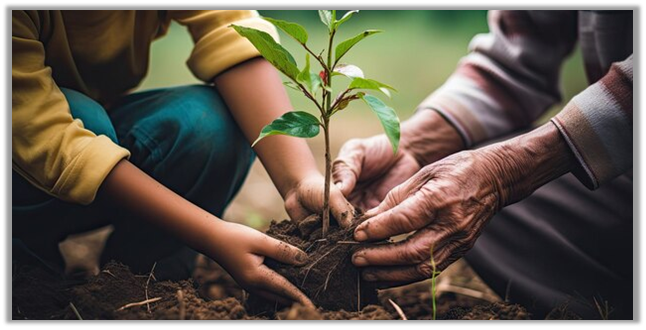
I continue to be amazed at the level of background noise (static) between the generations. It’s like trying to tune a cheap AM radio on a stormy night. (Ask a family elder about this one.) It also is true that no generation is perfect. Each generation, as I will get into later, has left some important tasks undone. The elderly, however, do know what works in this world. There is hope for our younger generations, but the jury is still out on how well they will do, especially in dealing with the Climate Change crisis.
That background static still persists. Although it is healthy for young people to rebel to some degree against their family elders, what constitutes a healthy degree of rebellion remains a topic of great debate. Each youth, after all, is trying desperately to find their own place; work out their own personas; discover their strengths and weaknesses, their likes and dislikes; what seems right; what works for them. It also is common for younger people to have deep affection for one or more family elders.
Family elders frequently feel that the young make too many foolish decisions, choose too many shallow or destructive pastimes, and haven’t learned how not to be bored. Many seem to have dismissed certain civilities, e.g., courtesy, thank you notes, tact, and the ability to recognize and use subtilties in speech and actions. Although today’s youth, as for any segment of human society, are important, it seems that the young often have an overrated sense of their own importance. The business world does cater to them; the young account for the major share of sales for numerous items because merchants know they will hope to acquire them without much regard for cost.
The young dismiss the old for their seemingly out-of-date ways and opinions, their frailties, and for their inability to do certain things. Many youth seem to feel that the computer and iPhone constitute the centers of existence, the lodestones from which all meaningful life arises. Many family elders use both computers and iPhones. Today’s youth grew up with them, family elders did not. The youth too often make electronic devices the centers of their existence. Elders do not, knowing that life offers many other, far richer ways to spend time. For the elders, these gadgets are tools, not toys.
Far too many youth act as if they feel that the elderly should just shut up, roll over, and play dead — or at least just get out of the way. Where is the appreciation of youth for the knowledge and wisdom the parent and grandparents have accumulated during many decades of living, and tried to pass on. What about the fact that each elder has punched the timecards of both domestic and workplace responsibilities for decades? What about the emotional and financial help given to younger family members through the years; the giving of life, the burping and bouncing on one’s knee, the blessings given to cherished young? We have learned what works in this world.
The outside forces with which I presently have to deal are vastly different from those of my youth. I both learned the new lessons and how to “swing with the punches.” I wonder just how well today’s youth are doing when I hear reports of the percentages of them who use drugs and alcohol regularly, have lost that sense of drive, that striving for the American dream, or are either depressed or having serious mental problems.
I know times are hard, but the youths of no generation ever had a cake walk. I have long argued that western society continues to make the huge mistake of not tapping into, with seriousness and expectation, the wisdom of the aged. We could do with more wisdom and less cleverness.
Today’s youth, if they are wise, should quickly realize that changes in external forces will continue to affect them also, and that they, at some future point, will be at the same place as the present elderly ones they now are prone to dismiss.
We elderly, at least, have learned that not everything changes. Such traits as honesty, trustworthiness, honor, humor, tact, fidelity, and devotion, and a positive work ethic are sturdy spokes in the Wisdom Wheel of the Ages.
I mentioned earlier that no generation has been perfect. My generation, and the couple before mine, have not responded in an intelligent and timely manner to the onrushing threats of the Climate Crisis. I recall, as long ago as the 1970s, wearing a large lapel pin (of my own manufacture) that carried the message “Fair Air is Only Fair.” No one in that university setting knew what I was trying to say. The populace just had not, emotionally, picked up on the fact that we had already fouled our air to a measurable degree. We were busy putting together a lifestyle of comfort and ease far beyond anything the world had seen. Even today, some 50 years later, in the face of clear signs that the weather is changing seriously against our American lifestyle, I see very little willingness within the older generations to go into battle. In addition to the decrease in energy that comes with aging, comfort, and ease are addictive.
I have seen signs that at least a working group of younger people is willing to pick up the torch. I wish them luck, and sense that many of us elderly will feel compelled to offer assistance in so far as our aging bodies are able. The younger generations will have to bear the brunt of the battles, efforts that must be put forth if Mother Earth is to provide for humans something other than a much-reduced level of food production, a much-decreased safety from weather, and a significant loss in general predictability of how things will be tomorrow, next month, or next year.
Just maybe, facing a common enemy will foster more overt expressions of understanding and love within families, and will lower to a weak simmer the inter-generational static that has for so long been a debilitating factor in western society.

Development Director

Health Services Director

Community Relations Director